
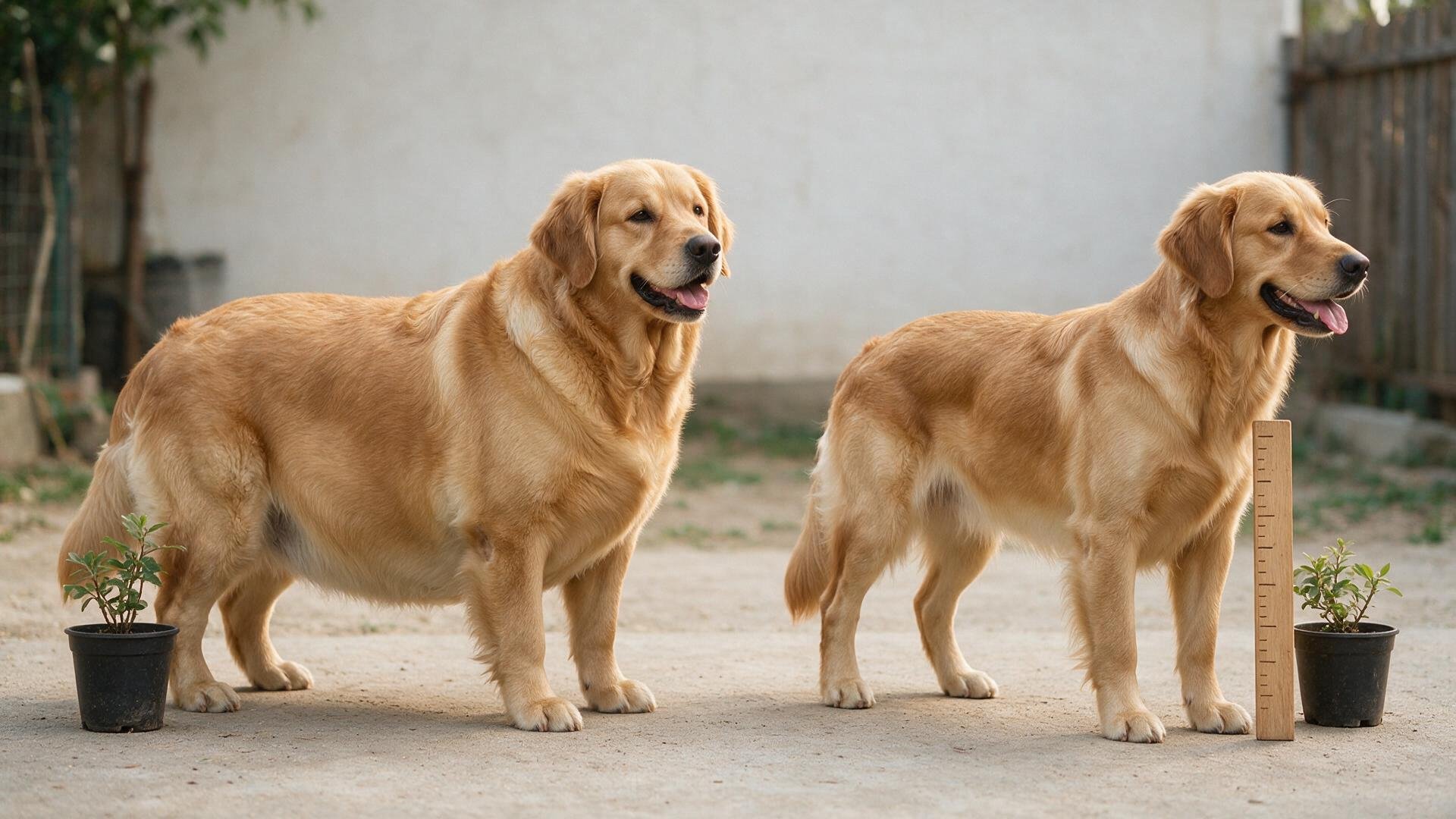
Is My Dog Overweight? A 2-Minute Body Condition Check for Malaysian Pet Parents
Quick answer: Your dog is likely overweight if you can't easily feel their ribs under a light layer of fat, can't see a clear waist from above, or their belly doesn't tuck up behind the ribs from the side. Vets use a 9-point body condition score (BCS), where 4–5 is ideal. You can do a simple version at home in two minutes, then confirm it with your vet.
Key takeaways
- The scale doesn't tell the whole story. A body condition score looks at ribs, waist and belly, and suits every breed and size.
- On the WSAVA 9-point scale, 4–5 is ideal and 6 or above is over ideal.
- Overweight dogs are common. In a 2022 US survey, vets found 59% of the dogs they saw were overweight or obese.
- Treats add up fast. Keep them to no more than 10% of daily calories.
- Weigh your dog's food, feed for the weight your vet says is right, and recheck every 2–4 weeks.
- Always see your vet before starting a weight-loss plan.
Why can't I just go by my dog's weight on the scale?
A number on the scale means little on its own. Two Golden Retrievers of the same weight can carry very different amounts of fat.
That's why vets use a body condition score, a hands-on check of fat cover. The World Small Animal Veterinary Association (WSAVA) recommends checking body condition at every vet visit.
It's easy to miss weight gain in a dog you see every day. The Association for Pet Obesity Prevention has found that many owners of overweight pets think their pet's weight is normal.
How do I check my dog's body condition score at home?
Do this check with your dog standing, in good light. Using your hands matters most for fluffy breeds like Pomeranians, Poodles and Shih Tzus, because their fur hides their shape.
- Feel the ribs. Lay your flat palms on both sides of the chest. You should feel each rib under a thin layer of fat without having to press, a bit like feeling the knuckles on the back of your hand.
- Look from above. Stand over your dog. There should be a visible waist, an inward curve between the ribs and the hips.
- Look from the side. Crouch down. The belly should rise up from the chest towards the back legs (the "abdominal tuck") instead of hanging level or sagging.
What do the body condition scores mean?
Here's a simplified version of the WSAVA 9-point body condition score chart for dogs:
| Score | What you'll notice | What it means |
|---|---|---|
| 1–3 | Ribs, spine and hip bones easily seen; no fat felt; very obvious waist | Under ideal: talk to your vet |
| 4–5 | Ribs easy to feel with a light fat cover; waist visible from above; belly tucked from the side | Ideal |
| 6 | Ribs felt only with some pressure; waist barely visible | Over ideal |
| 7 | Ribs hard to feel under heavy fat; no waist; no belly tuck | Overweight: see your vet |
| 8–9 | Heavy fat over the chest, spine and base of tail; belly may sag | Obese: see your vet soon |
As a rough guide, every point above 5 is often described as about 10–15% extra body weight. Your vet can give you a target weight for your own dog.
Why do a few extra kilos matter?
A University of Liverpool study of more than 50,000 dogs from 12 popular breeds, including Shih Tzus, Pomeranians, Labradors and Beagles, found that overweight dogs lived up to two and a half years shorter than dogs at an ideal weight. The researchers also linked extra weight to joint disease, breathing problems and some cancers.
In Malaysia's heat and humidity, extra weight can make it harder for a dog to breathe and stay cool, especially for flat-faced breeds like Shih Tzus and Pugs.
What usually causes weight gain in dogs?
In most homes, weight gain comes from small daily habits rather than one big mistake:
- Scooping instead of weighing. A "cup" of kibble varies more than you'd think.
- Feeding for the current weight. If your dog is already heavy, the pack amount for that weight keeps them heavy.
- Treats and table food. A bit of chicken rice, roti or biscuit from the family table adds up.
- Fewer walks. Heat, haze and rain cut walks short. MetMalaysia says the inter-monsoon period brings late-afternoon and evening thunderstorms, just when many of us walk our dogs.
- Life changes. Desexing and getting older can lower a dog's energy needs. Ask your vet whether portions should change.
How can I help my dog reach a healthy weight?
Start with a vet visit to rule out medical causes and set a target weight. Then use this checklist at home:
- Weigh food on a kitchen scale and split the daily amount into meals.
- Feed for your dog's target weight, using the pack's feeding guide as a starting point and your vet's advice to adjust it.
- Count treats as part of the day's food. Vets often suggest treats make up no more than 10% of daily calories.
- Walk in cooler hours, like early morning, and keep indoor games for rainy evenings: sniff-and-find with kibble, tug or short training sessions.
- Get the whole family on board, and use kibble from the daily portion as rewards.
- Recheck BCS and weight every 2–4 weeks and write it down.
How does a dog food label help with portion control?
The guaranteed analysis on a pack lists minimum protein and fat, and many packs also state metabolisable energy (ME), the calories per 100 g or per kg. That number makes the 10% treat rule easy to work out.
Take Spotty Plus+, which states 344 kcal per 100 g on its product page. A dog fed 150 g a day gets about 516 kcal from its food, so treats should stay at around 50 kcal a day.
Spotty Original lists 18% crude protein (min) and 8% fat (min). Spotty Plus+ lists 23% crude protein (min) and 13% crude fat (min). Both product pages include a daily feeding guide by body weight, and the Spotty site has a full dog feeding guide for puppies, adults and seniors. If you're not sure which suits your dog, take the pack to your next vet check.
Whatever you feed, your best tools are a kitchen scale, your hands and regular vet check-ins. Compare Spotty Original and Spotty Plus+ on the Spotty website, or find a pet store near you.
FAQ
How do I know if my dog is overweight without a scale?
Do the rib, waist and belly check. If the ribs are hard to feel, there's no waist from above, or the belly doesn't tuck up, your dog is likely above ideal. Ask your vet to confirm.
What is a healthy body condition score for a dog?
On the WSAVA 9-point scale, 4–5 is ideal. You should be able to feel the ribs under a light fat cover and see a clear waist.
How many treats can I give my dog a day?
A common vet guideline is that treats should be no more than 10% of your dog's daily calories. The rest should come from a complete and balanced food.
How fast should an overweight dog lose weight?
Your vet should set the pace, because it depends on your dog's health, age and starting weight. Slow, steady progress with regular weigh-ins is the usual approach.
Can I just feed my dog less of the same food?
Sometimes, but big cuts can also reduce the vitamins and minerals your dog gets. Talk to your vet before making large changes.
How often should I check my dog's body condition?
Monthly suits most adult dogs, or every 2–4 weeks during a weight plan. Write the score and weight down to spot trends.
This article is general information, not veterinary advice. Please check with your vet about your dog's weight, diet and health.